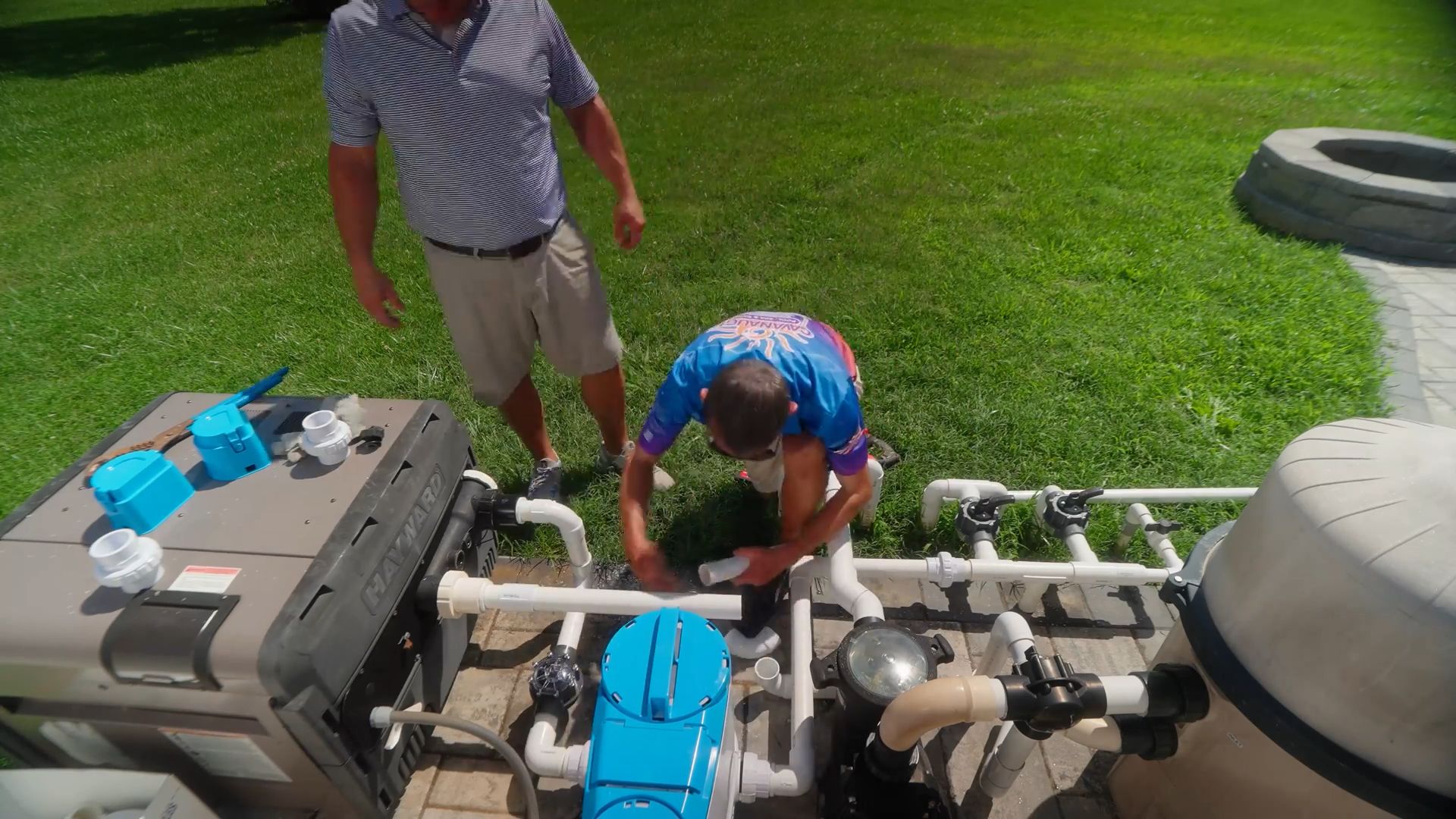
Installation testing has given us real-world insight into exactly how PoolSense performs, and it’s also surfaced the questions dealers and homeowners are asking most. We’ve put our Sr. Product Manager, Pool Solutions, Kevin Harms, on the case to answer the top ones.
What equipment is required to install the feeder?
Every installation is different, but generally a tool to cut the PVC, a Phillips screwdriver, PVC cement, and saftey gloves/glasses.
Does PoolSense require Wi-Fi coverage at the equipment pad?
No, but it is highly recommended. The device will work without Wi-Fi. for the optimal experience and total customization, Wi-Fi is recommended to allow access to the mobile app.
What is ORP?
ORP (oxidation-reduction potential) is a measure of how effectively the pool water can kill contaminants, essentially indicating how strong the sanitizer is at keeping the water clean and safe.
Will the feeder immediately correct poor water chemistry?
Yes! The PoolSense system monitors pool water quality 24/7 and adjusts the doses to overcome any situation, leaving the pool pristine at all times. For initial startup, additionally chemicals may be required to correct water chemical imbalances before using PoolSense. This will reduce the chemical usage of PoolSense.
What are the target/maximum water chemistry values while using this system?
Provided values in an attachment to these comments. Some of these may change as we learn more of where we think the sweet spot is for the best performance of the feeder, but currently this is a good place to start.
Can PoolSense be used in commercial applications?
Yes. The feeder is designed to operate on most small- to medium-sized pools, typically ranging from 5,000 to 40,000 gallons. For commercial pools, the key consideration is the pool’s chlorine demand compared to the feeder’s maximum output of approximately 12 lbs. of available chlorine per day. Larger or heavily used commercial pools may require additional evaluation to determine suitability.
The feeder is currently undergoing NSF certification, and the final NSF-rated capacity and application.
How can dealers use the PoolSense App?
Dealers can use the app to connect to the device while on site to check on current status, sensor readings, and perform basic troubleshooting if needed. IF given remote monitoring access by the homeowner or business owner, the dealer can also check in on each pool in their service area to plan their work load accordingly.
How long do the cartridges and pouches last?
Chemical usage varies from pool to pool based on factors such as pool size, swimmer load, sunlight exposure, water balance, and your selected chlorine and pH setpoints. However, under typical conditions and using the recommended settings, most pools will require chlorine and pH pouch replacement about every 3 – 4 weeks. Pools with higher chemical demand may need more frequent replacements, while others may go longer between refills.
What maintenance is required?
Checking and cleaning the filter strainers quarterly to prevent solenoid failure. Weekly manual tests to ensure the pH sensor is calibrated. Replacing empty chemical cartridges and pouches.
Do I have to touch chemicals?
The device uses pre-filled chlorine cartridges and pH pouches designed to minimize direct contact with pool chemicals during normal use. However, we recommend wearing gloves and following all safety instructions when handling and replacing the chemical containers.
What space is required for installation?
There are no specific space restrictions for the installation of the feeder. The feeder footprint is ~25in x 15.5in with a minimum height of ~21in. However, if the unit is installed below the pool water level or below the filter or heater, an isolation valve upstream and a check valve downstream are recommended to help prevent unwanted water flow and facilitate maintenance.